

The Skill in Your DNA
a quiz to find your natural divination method

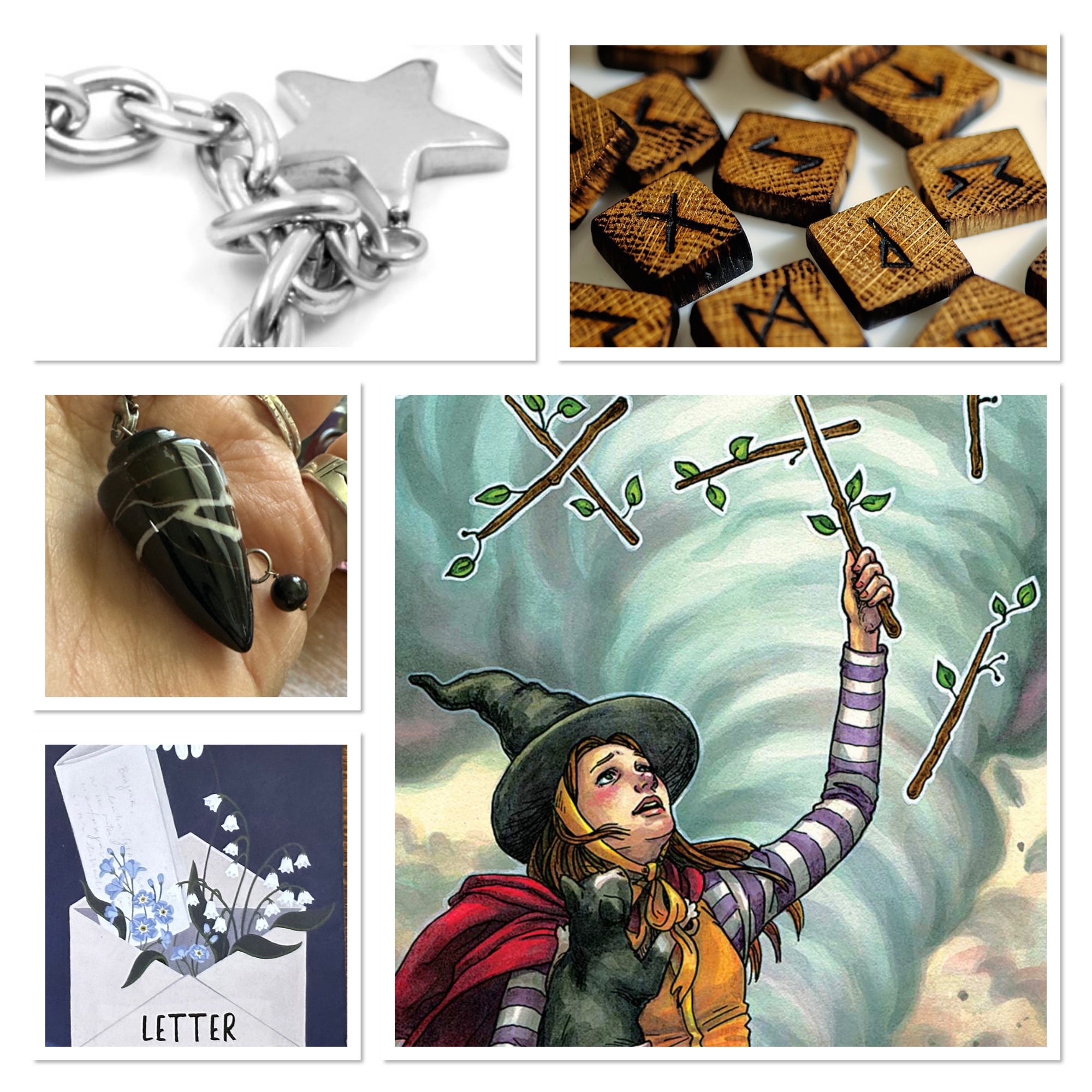
This quiz reveals the
skill that lives naturally in your DNA. This isn’t what looks mystical on Instagram.
And it’s not what you think you should use.
Every lineage carries survival skills. Some ancestors learned to read patterns. Some tracked cause and effect. Some weighed consequences. Some adjusted physical systems. Some relied on clear signals to act quickly.
Those ways of knowing don’t disappear. They get passed down through bodies, habits, nervous systems, and DNA.
Your result points to the divination skill that already lives in you.
Answer honestly. Choose what feels true, not what feels romantic.
1. When you ask for guidance, what frustrates you most?
A. Too many possible interpretations
B. Answers that feel vague or symbolic
C. Insight that arrives without weight
D. Tools that stay theoretical
E. Tools that talk too much
2. You trust information most when it is:
A. Contextual and layered
B. Literal and specific
C. Rooted in consequence
D. Physically present
E. Clear and unambiguous
3. When facing a decision, you usually need:
A. To understand what kind of situation this is
B. To know who or what is connected to what
C. To know the cost of each path
D. To work something out with your hands
E. To know yes, no, or not yet
4. You abandon a divination practice when:
A. It feels shallow
B. It never gets concrete
C. It feels too casual
D. It stays abstract
E. It invites overthinking
5. Your natural way of processing information is:
A. Pattern recognition
B. Spatial and relational
C. Philosophical and evaluative
D. Kinesthetic and tactile
E. Binary and decisive
6. Which sounds most useful, not exciting?
A. Reviewing a situation over time
B. Mapping how people and factors interact
C. Consulting a system that doesn’t soften answers
D. Adjusting a physical layout until it feels right
E. Getting a clear signal and moving on
7. When a tool “works,” you feel:
A. Oriented
B. Grounded
C. Sobering clarity
D. Settled in your body
E. Relieved
8. Your life right now is best described as:
A. Complex, with repeating themes
B. Busy and interpersonal
C. Serious, with long-term consequences
D. Hands-on or materially focused
E. Time-sensitive
9. You dislike divination that:
A. Ignores context
B. Dances around the point
C. Tries to comfort you
D. Stays in your head
E. Turns everything into a story
10. When insight lands, you prefer to:
A. Sit with it and track it
B. Act on it quickly
C. Respect it
D. Adjust your environment
E. Decide immediately
11. Your biggest mistake with divination has been:
A. Asking too often
B. Asking the wrong questions
C. Wanting lighter answers
D. Not trusting embodied signals
E. Overcomplicating decisions
12. Which sentence feels most accurate?
A. “I need to understand what’s happening.”
B. “I need to know how this connects.”
C. “I need to know what this will cost me.”
D. “I need to work this out physically.”
E. “I need to know whether to proceed.”
13. You’d rather:
A. Use one tool deeply
B. Use a tool that speaks plainly
C. Use a tool that doesn’t bend
D. Use a tool you can touch
E. Use a tool that ends the question
14. A good divination practice should:
A. Teach discernment
B. Clarify reality
C. Demand responsibility
D. Engage the body
E. Reduce noise
Score Your Quiz
If you receive mostly:
A → Tarot
B → Lenormand
C → Runes
D → Charms
E → Pendulum / Binary tools
Tie-breaker rule: Choose the method that feels slightly less romantic. Weird, but true.
Your Result: The Divination Skill You Inherited
A → Pattern Reader (Tarot)
You inherited the ability to see systems.
You don’t experience life as isolated events. You feel themes. Cycles. Recurring dynamics. You notice when something keeps repeating, even if you can’t immediately explain why.
You tend to ask questions like:
What’s really going on here?
Why does this feel familiar?
What’s underneath the surface?
You’re wired to track emotional weather, power shifts, burnout, timing issues, and slow transformations. You need context before action.
This skill likely comes from ancestors who had to navigate complexity. People who survived by reading rooms, sensing moods, tracking long arcs, and understanding how multiple pressures collide.
You work best when you can revisit a situation over time. Insight deepens through reflection. You learn by watching patterns unfold.
You inherited discernment through observation.
Pattern Readers thrive when:
Life feels layered or tangled
You’re processing identity, responsibility, or long-term change
You’re willing to sit with insight before acting
Pattern Readers struggle when:
You need instant answers
The window for action is extremely narrow
The question is purely yes/no
Your strength is meaning-making. Your danger is analysis paralysis.
B → Connection Mapper (Lenormand)
You inherited situational intelligence.
You naturally track who is involved, what influences what, and how information moves through a system. You care about logistics, behavior, timing, and outcomes more than emotional storytelling.
You think in cause and effect.
This skill often comes from ancestors who managed households, businesses, negotiations, migrations, or social networks. People who needed to understand practical reality quickly and clearly.
You don’t want symbolism. You want traction.
You ask:
Who is influencing this?
What happens next if nothing changes?
Where is this headed?
You’re built for navigating workplaces, communication breakdowns, money flow, schedules, and interpersonal dynamics where facts matter.
You inherited clarity through structure.
Connection Mappers thrive when:
You’re dealing with external systems
You need actionable information
You can ask specific questions
Connection Mappers struggle when:
The situation is purely internal or emotional
The question is vague
You’re seeking spiritual reassurance
Your strength is realism. Your danger is dismissing subtler emotional layers.
C → Threshold Keeper (Runes)
You inherited consequence awareness.
You don’t approach decisions casually. You feel weight. You sense when something matters.
This skill comes from ancestors who faced irreversible choices: migrations, survival decisions, moral crossroads, long-term responsibility. People who learned to respect limits.
You come to guidance when you’re standing at a threshold.
You care about:
What this will cost
What must be carried
What cannot be avoided
You are willing to hear about restraint, delay, sacrifice, or endurance.
You inherited truth through consequence.
You don’t need comfort. You need honesty.
Threshold Keepers thrive when:
You’re facing a life-shaping decision
You’re ready to accept difficult information
You value responsibility over reassurance
Threshold Keepers struggle when:
You’re emotionally raw
The choice is minor
You’re seeking validation
Your strength is integrity. Your danger is becoming overly severe with yourself.
D → Embodied Adjuster (Charms)
You inherited physical intelligence.
You understand life as something that shifts through small, tangible changes. You feel imbalance in your body before you can name it intellectually.
This skill often comes from caretakers, builders, gardeners, healers, and system-maintainers. People who worked with their hands and learned that stability comes from ongoing adjustment.
You don’t expect dramatic revelations. You work through gradual recalibration.
You notice:
Where pressure builds
What’s crowded
What’s neglected
What needs rearranging
You inherited wisdom through touch and space.
You change your environment to change your life.
Embodied Adjusters thrive when:
You’re managing ongoing systems
You prefer hands-on practices
You’re making incremental change
Embodied Adjusters struggle when:
You want fast answers
You need firm timelines
You’re trying to force closure
Your strength is sustainability. Your danger is avoiding decisive moments.
E → Decision Closer (Pendulum / Binary Tools)
You inherited action clarity.
Your issue isn’t understanding. It’s hesitation.
You already know your options. You’ve analyzed. You’ve reflected. Then you stall.
This skill comes from ancestors who had to make quick calls with limited information. People who learned that momentum matters.
You work best with clear signals.
Yes.
No.
Not yet.
You inherited movement through decisiveness.
Binary tools don’t give you wisdom. They give you permission to act.
They cut through overthinking and return you to motion.
Decision Closers thrive when:
You’re circling simple choices
Timing matters
You’re ready to commit
Decision Closers struggle when:
The question is vague
You keep re-asking
You don’t respect the answer
Your strength is forward motion. Your danger is bypassing deeper reflection.
If More Than One Skill Resonated
That’s normal.
Most people carry more than one ancestral way of knowing. But one usually leads.
Use this rule:
If you process through patterns and reflection → Pattern Reader
If you focus on logistics and outcomes → Connection Mapper
If you’re facing a serious crossroads → Threshold Keeper
If you work through gradual adjustment → Embodied Adjuster
If you get stuck in hesitation → Decision Closer
Start with the skill that already shows up in how you make everyday decisions.
Divination works best when it follows your nervous system, not your ideals.
How to Begin Working With Your System This Week

