

Breaking Generational Patterns: A Tarot Spread to Heal Family Trauma
ask your ancestors for help


Some family patterns began generations ago
but somewhere along the way, today’s family forgot that yesterday’s family habits are no longer needed. Take money, for example. If your ancestor arrived in the U.S. in the early 20th century, chances are they had very little money.
Below is an immigration record from 1939, showing John Punch arriving from Ireland with $5 in his pocket. In 1940, the average rent in New York City was $40 a month. It’s no wonder that John and his future family became penny pinchers.
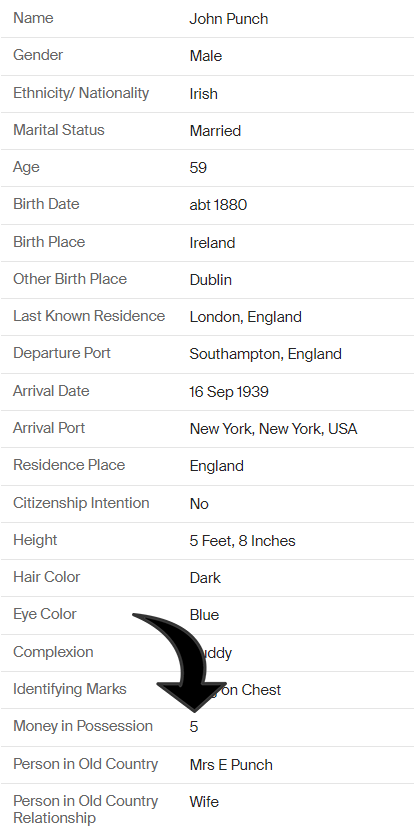
But, unless the family went on a downward trajectory, it’s unlikely that 85 years later (2024) the family was impoverished. But, what could have lasted all those decades was the belief that there was a ‘need’ for penny pinching.
I witnessed this in a friend whose husband was raised with the constant mantra of ‘we can’t afford it’. So when their daughter wanted to go to college, he said it was impossible. My friend, raised without that pattern said ‘no problem, we’ll find a way’.
Now this is just one simple example of
a family or generational pattern. There are many more, including:
Emotional Repression: Families that discourage expressing emotions often create an environment where vulnerability is seen as weakness. This can lead to generations of people struggling with unprocessed emotions, anxiety, and difficulty forming deep connections.
Codependency: Families that emphasize self-sacrifice, people-pleasing, or emotional caretaking over self-care can create patterns of codependency, where individuals prioritize others’ needs at the expense of their own emotional health.
Addiction: Substance abuse or addictive behaviors, including alcohol, drugs, or compulsive behaviors (like gambling or shopping), often run in families, creating cycles of trauma and dysfunction that are difficult to break.
Authoritarian or Controlling Parenting: Parenting styles that are overly controlling, rigid, or punitive can be passed down, leading to patterns of rebellion, fear, or difficulty with self-expression in future generations.
Poor Conflict Resolution: Families that avoid conflict or engage in unhealthy ways of resolving disputes—such as yelling, manipulation, or the silent treatment—can pass down the inability to navigate conflict constructively, leading to strained relationships.
Shame and Guilt-Based Motivation: A pattern where family members are motivated by fear of judgment, shame, or guilt can result in low self-worth and perfectionism. This often leads to future generations feeling they are never "good enough."
Racism, Prejudice, or Discrimination: Generational beliefs rooted in racism or prejudice can create biases that are passed down without question, leading to harmful behaviors and beliefs that reinforce systemic inequality.
Avoidance of Mental Health Care: A family culture that stigmatizes mental health issues or discourages seeking help can perpetuate untreated depression, anxiety, and trauma, contributing to ongoing emotional and psychological struggles in future generations.
Workaholism or Overvaluation of Productivity: Families that equate worth with productivity, emphasizing achievement over well-being, can pass down patterns of burnout, stress, and neglect of personal needs. This can lead to generational exhaustion and a lack of balance between work and life.
These patterns often go unnoticed until someone consciously works to break the cycle.
So how can your Ancestors help break these
generational patterns? Get your tarot or oracle deck and let’s see how they can help.
